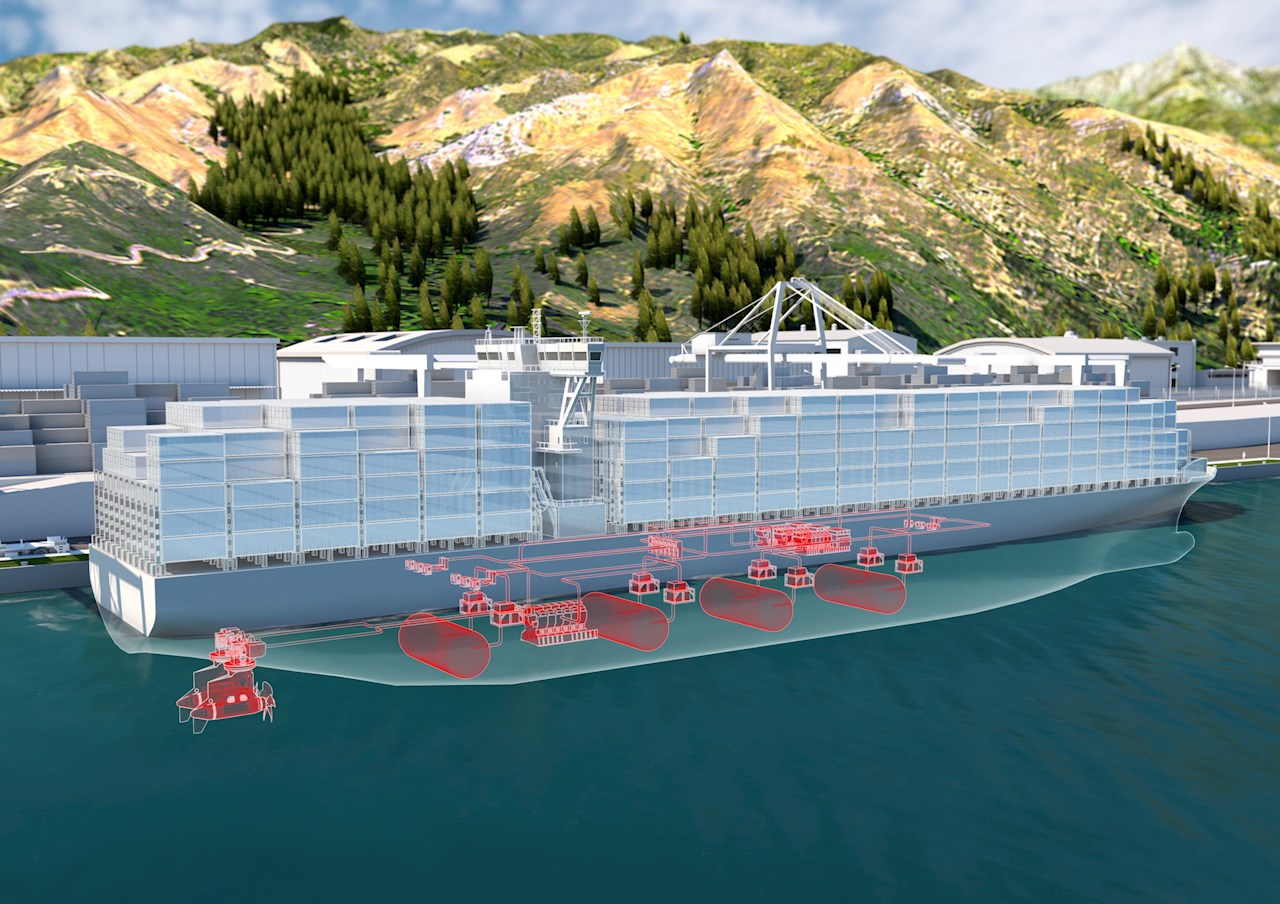
For followers of the hydrogen shipbuilding sector, the early-2026 stock market narrative around PowerCell Sweden misses the point. While financial media focuses on quarterly earnings timing and a story from a disgrunted ex-employee, those of us watching the assembly floor are tracking a different set of indicators: the steel being cut, the stacks being commissioned, and the contracts being signed. By those measures, PowerCell is in the middle of its most consequential industrial transition since founding.
⚡ TL;DR
- What: PowerCell Sweden is transitioning from the established 225 kW Marine System 225 to the 1 MW MS-500 platform — the first commercial MS-500 marine order has been placed (SEK 44m, Italian OEM).
- Why it matters: The MS-500's 80,000-hour durability target matches medium-speed diesel overhaul cycles — closing the last major argument against hydrogen fuel cells for main propulsion on large commercial vessels.
- Key data: Marine backlog: SEK 400m+. Order highlights: 56 units for cruise (SEK 165m), 14 units for bulk carriers (SEK 40m+), 2 MW methanol-reformer system (SEK 150m).
- Timeline: MS-225 deliveries ongoing through 2026–2027; MS-500 serial development underway; MiNaMi 80,000-hour results feeding into 2028–2030 commercial deployments.
- Watch for: Whether the MS-500's containerized integration format gets adopted as a de facto standard across European shipyards — that would be the tipping point for volume manufacturing.
From Workhorse to Powerplant: The MS-225 Established the Baseline
For years, the Marine System 225 (MS-225) has been the reference system for PEM fuel cells in commercial maritime applications. With Lloyd’s Register type approval and deployments across vessel types — from the research vessel Prince Madog to the cruise ship Explora V — the MS-225 proved a fundamental proposition: that PEM fuel cells can survive the corrosive, high-vibration, thermally variable environment of the open sea.
From a naval architect’s perspective, that type approval process was the hard part. The MS-225 had to demonstrate compliance with class society rules that were, frankly, written for combustion machinery. Getting a fuel cell stack certified for main or auxiliary power on a seagoing vessel required new test protocols, new safety analyses, and significant engagement with Lloyd’s Register and DNV. That groundwork is now done — and the MS-500 inherits it.
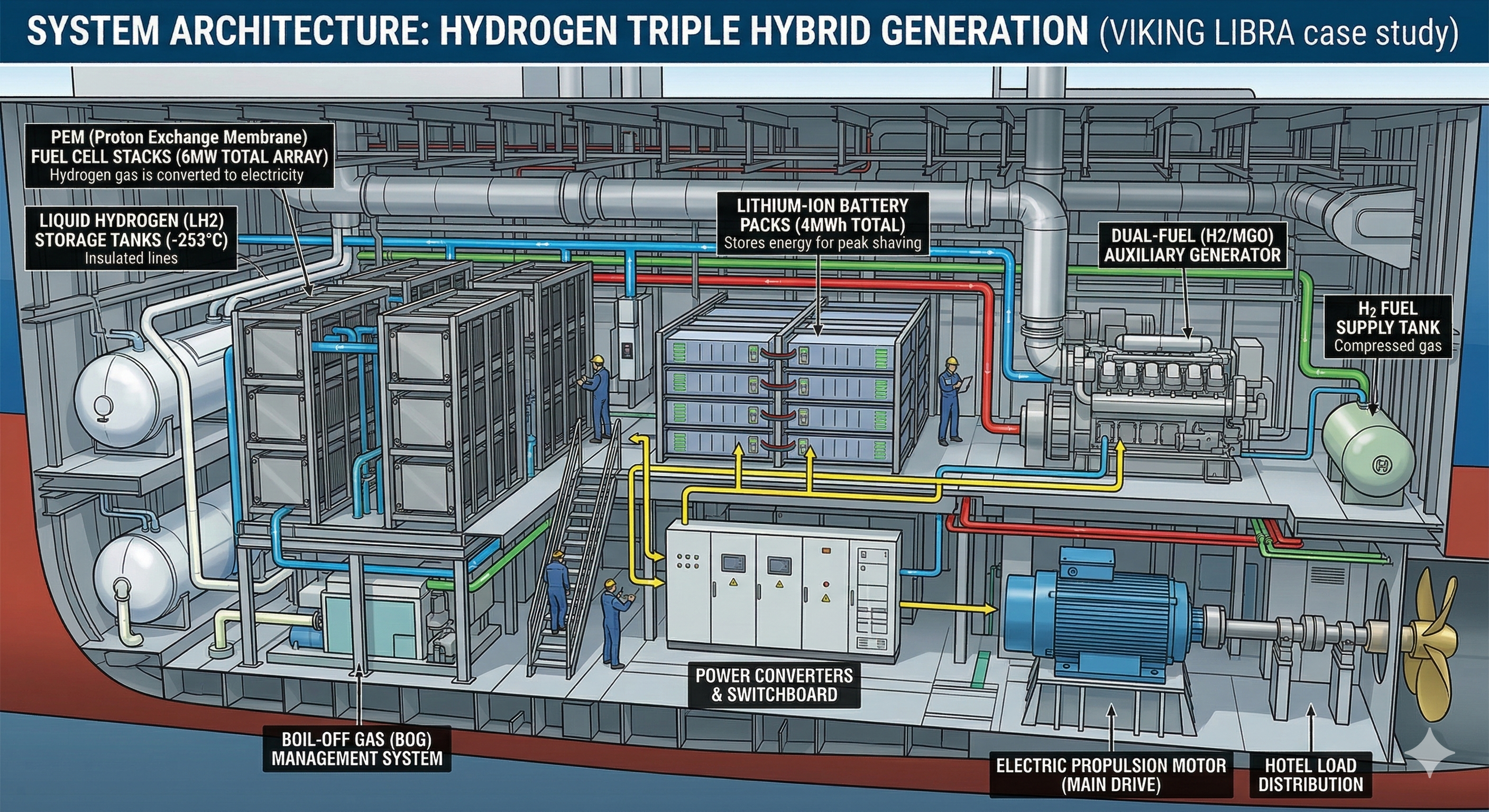
The MS-225’s commercial limitation is straightforward: at 225 kW per unit, equipping a vessel with meaningful propulsion power requires linking many units together. The Viking Libra — currently the most advanced hydrogen-propulsion vessel we track on hydrogenshipbuilding.com — uses a multi-unit array to reach its installed fuel cell power. That works, but it multiplies installation complexity, piping runs, and thermal management demands. Every additional unit is another hydrogen supply connection, another cooling circuit, another control interface.
The MS-500 addresses this directly.
The MS-500: What the Numbers Mean in Practice
The headline figure — up to 1,000 kW (1 MW) per unit within a similar physical footprint to the MS-225 — is striking, but the engineering significance goes deeper than power density.
| Feature | Marine System 225 | MS-500 |
|---|---|---|
| Status | Fully commercial / Type Approved | Serial development / First orders placed |
| Net output | 225 kW | Up to 1,000 kW (1 MW) |
| Architecture | Modular stack + ACM + EC | Integrated HDS platform |
| Dimensions (W × D × H) | 1.2 × 0.9 × 2.0 m | Similar footprint |
| Weight | ~1,145 kg | TBD (optimised for density) |
| Voltage output | 430–775 VDC | Up to 1,100 VDC |
| Fuel flexibility | Compressed H₂ / methanol reformer | Compressed H₂ / LH₂ / e-fuels |
| Target durability | ~30,000 hours | 80,000 hours (MiNaMi target) |
| Primary application | Auxiliary / port power / small ferries | Main propulsion / bulk carriers / cruise |
Power-to-volume: the shipyard constraint
Ship designers don’t work in abstractions — they work in compartments. The machinery room on a bulk carrier or cruise ship has fixed dimensions determined by hull form, class rules, and cargo requirements. Doubling the output per unit without increasing footprint is not a marketing claim; it is a direct reduction in the number of system connections, the volume of cooling pipework, and the footprint of hydrogen supply manifolds. For a shipyard quoting an installation, that translates to fewer engineering hours and a more predictable integration programme.
Containerized integration: the paradigm shift
Both the MS-225 and MS-500 are now offered in containerized format — pre-commissioned inside standard 20- or 40-foot ISO containers. From a shipbuilding programme management perspective, this is significant. It means the hull can be built on a conventional schedule while the fuel cell power plant is commissioned in a controlled environment elsewhere. The two programmes only converge at final outfitting, when the container is craned into the machinery space and connected. This decouples the fuel cell commissioning risk from the critical path of the build.
The 80,000-hour target: matching the diesel benchmark
The durability gap has always been hydrogen propulsion’s weakest argument. A medium-speed diesel engine on a bulk carrier or RoRo — a Wärtsilä 32 or MAN B&W S-type — is designed for 80,000–100,000 hours between major overhauls. That is the benchmark a shipowner’s technical superintendent uses when evaluating any alternative propulsion system. Until recently, PEM fuel cells were quoting 20,000–40,000 hours, which implied two to four stack replacements over a vessel’s 25-year life — an unacceptable maintenance burden.
The EU-funded MiNaMi project — which we covered in depth in One Million Nautical Miles — targets exactly this gap. The 80,000-hour figure is not arbitrary: it is the threshold at which hydrogen propulsion becomes comparable to diesel on a total lifecycle maintenance cost basis. PowerCell is the core fuel cell technology partner in that consortium.
The Order Book: Real Contracts, Real Deliveries
The current marine backlog demonstrates that the MS-225 has moved well past demonstration phase.
GMI Rederi bulk carriers — SEK 40m+
In late 2025, PowerCell secured a contract to supply 14 Marine System 225 units for what will be the world’s first hydrogen-powered bulk carriers, built for Norwegian operator GMI Rederi. The vessels are 85-metre coastal bulkers — exactly the type of “unglamorous” workhorse that constitutes the backbone of intra-European dry bulk trade.
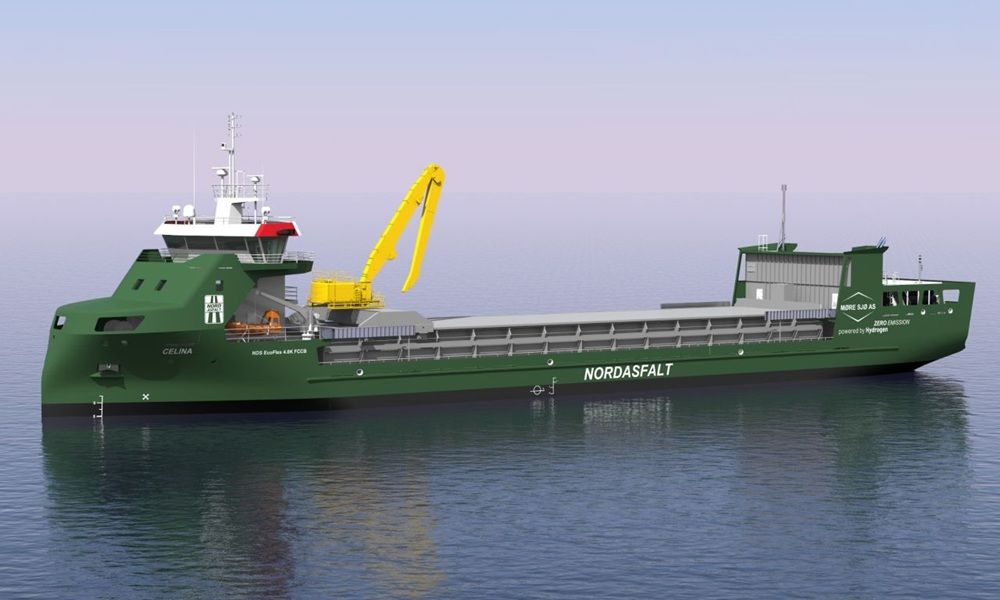
As a naval architect, this is the contract I find most technically interesting. Bulk carriers have no prestige margin to absorb extra costs — they compete purely on freight rates and operating expenses. The fact that GMI Rederi has committed to hydrogen propulsion for this vessel type signals that the total cost calculation is within reach of commercial viability, at least on Norwegian coastal routes with access to green hydrogen supply.
Italian OEM cruise order — SEK 165m
The largest single contract in the current backlog: 56 Marine System 225 units, totalling 6.3 MW of installed fuel cell capacity, for an Italian marine OEM serving the cruise sector. The primary application is zero-emission auxiliary power at berth — replacing the diesel generators that currently run continuously while cruise ships are in port, contributing significantly to air quality problems in port cities like Venice, Barcelona, and Hamburg.
At 6.3 MW, this is also the largest single fuel cell installation we are aware of in the commercial maritime sector. It sets a new reference point for what “large-scale” means in this industry.
M2Power methanol integration — SEK 150m
The third major contract covers a 2 MW system integrating methanol reformers — PowerCell’s M2Power technology. Liquid methanol is bunkered conventionally (no cryogenics, no high-pressure gas handling), then reformed onboard to extract hydrogen, which feeds directly into the fuel cells.
From an engineering standpoint, this is a pragmatic solution for vessels operating on routes without green hydrogen bunkering infrastructure. It trades some efficiency for dramatically simpler fuel logistics. As bunkering infrastructure matures, these vessels could potentially transition to direct hydrogen supply with a relatively contained system modification.
First commercial MS-500 order — SEK 44m
The most forward-looking item in the backlog: a SEK 44m order from an Italian OEM representing the first commercial placement for the MS-500 platform. This is the proof point that the MS-500 has cleared the threshold from development programme to commercial product. The Italian OEM relationship — the same partner behind the 56-unit cruise order — suggests a structured technology roadmap from the MS-225 installations toward the higher-power MS-500 generation.
Summary: marine backlog as of March 2026
| Contract | Value | Units / Power | Delivery |
|---|---|---|---|
| Italian OEM — cruise auxiliary | SEK 165m | 56 × MS-225 (6.3 MW) | Ongoing |
| M2Power — methanol system | SEK 150m | 2 MW integrated reformer | 2026 |
| GMI Rederi — bulk carriers | SEK 40m+ | 14 × MS-225 | 2026–2027 |
| Italian OEM — MS-500 (first order) | SEK 44m | MS-500 platform | TBD |
Why This Matters for Shipbuilders
The transition from MS-225 to MS-500 is not just a product upgrade — it is a signal about where the market is heading. When a fuel cell manufacturer can offer a 1 MW containerized unit with an 80,000-hour durability target, type approved by class societies, with an established installation methodology, the remaining barriers to adoption are commercial rather than technical.
For shipyards, the containerized format removes the bespoke integration risk that has historically made hydrogen propulsion projects expensive and programme-critical. For shipowners, the durability target removes the lifecycle maintenance argument. For naval architects specifying newbuilds in 2026 and beyond, the MS-500 is the first hydrogen propulsion component that can be compared directly to conventional alternatives on a like-for-like technical basis.
The fact that PowerCell’s CTO and Deputy CEO purchased approximately 200,000 shares in early 2026 — when the stock market was in retreat — is, from an engineering perspective, the least surprising detail in this story. The order book is real. The technology transition is real. The rest is timing.
Challenges and Open Questions
- MS-500 type approval timeline: Serial development is underway, but class society type approval for the MS-500 — particularly for main propulsion applications — will be the critical gating event for widespread adoption. LR and DNV will need updated certification frameworks.
- Green hydrogen availability on Norwegian coastal routes: The GMI Rederi contract depends on a functioning bunkering infrastructure. GreenH’s Halten terminal is the key supply node; its build-out schedule directly determines when these vessels can operate as designed.
- MiNaMi 80,000-hour validation: The target is set; the proof is years away. Maritime duty cycles — variable loads, salt air, vibration, thermal cycling — are harder than controlled laboratory conditions. Whether 80,000 hours holds at sea is what actually matters.
- Methanol reformer efficiency penalty: The M2Power system introduces conversion losses between the methanol feed and the hydrogen entering the fuel cell. Quantifying the real-world well-to-propeller efficiency relative to direct hydrogen — and relative to methanol direct combustion — will be important for lifecycle emissions accounting under FuelEU Maritime.
- Volume manufacturing capacity: A SEK 400m+ backlog is significant for a company of PowerCell’s size. Scaling production without quality degradation is the industrial challenge that comes next.