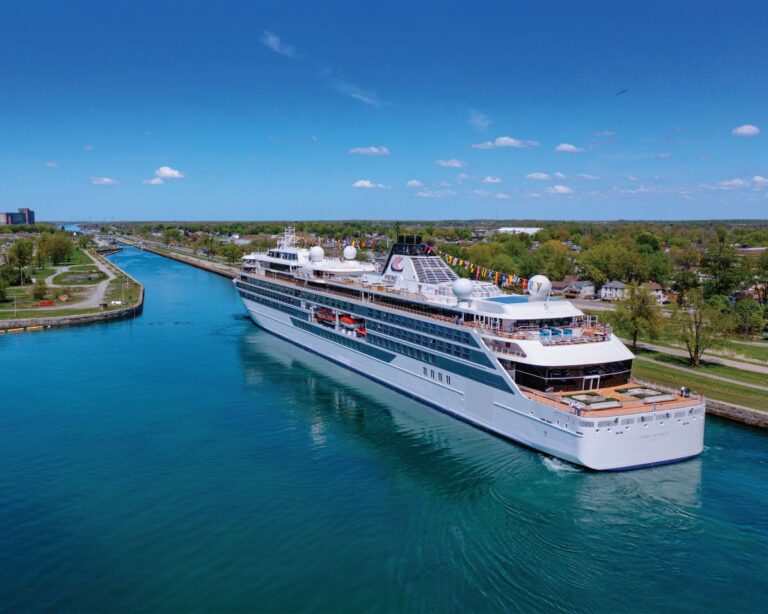
Meyer Werft has launched H2MASS, a German-funded consortium project to build a 4 MW metal hydride hydrogen energy system for cruise ships at berth — not propulsion, port power. The technology isn’t new to the consortium: Hereon, one of the four partners, already proved metal hydride storage at sea on the research vessel Coriolis, at 100 kW. H2MASS is the roughly 40x scale-up bet.
⚡ TL;DR
- What: H2MASS is developing an integrated 4 MW metal hydride hydrogen energy system to power large cruise ships during port stays.
- Who: Meyer Werft (lead), Helmholtz-Zentrum Hereon, Helmut Schmidt University/University of the Federal Armed Forces Hamburg, and Carnival Maritime GmbH.
- Why it matters: It targets hotel-load emissions at berth with onboard storage rather than shore-side grid capacity, using a storage chemistry the IMO currently excludes from its hydrogen-fuel rules for propulsion — a gap this project's port-only framing may sidestep.
- Key data: 4 MW target, scaling up from Hereon's 100 kW PEM fuel cell / 30 kg H2 metal hydride system already operating on Coriolis.
- Timeline: Launched 1 May 2026; funded by Germany's Federal Ministry for Economic Affairs and Energy, coordinated by Projektträger Jülich.
- Watch for: Whether metal hydride's weight penalty — brutal at small scale — holds up once you're building for megawatts instead of kilowatts.
What H2MASS Is Actually Building
The scope, as far as the public reporting goes, is narrower than it first sounds. H2MASS isn’t trying to power a cruise ship’s propulsion train on hydrogen — it’s targeting the hotel load at berth: the electricity a docked cruise ship still needs for lighting, HVAC, galleys, and everything else, normally supplied by running diesel auxiliary engines dockside. That’s exactly the load cold-ironing (shore power) is meant to replace, except H2MASS proposes to carry the energy with the ship rather than depend on port grid infrastructure that, in most of the world, still isn’t there.
| Partner | Role |
|---|---|
| MEYER WERFT | Shipbuilder, consortium lead |
| Helmholtz-Zentrum Hereon | Metal hydride storage R&D (same team behind Coriolis) |
| Helmut Schmidt University / Univ. of the Federal Armed Forces Hamburg | Research partner |
| Carnival Maritime GmbH | Cruise operator, end-user requirements |
The work plan, per the available reporting, covers construction and testing of a physical demonstrator under realistic operating conditions, plus a digital twin to model and refine the system before anyone commits it to an actual newbuild. Funding comes from Germany’s Federal Ministry for Economic Affairs and Energy, coordinated through Projektträger Jülich — no public figure for the award amount or project duration has surfaced yet.
Why Metal Hydride, and Why Hereon
This isn’t Hereon’s first attempt at this. Its research vessel Coriolis, delivered in January 2025, runs a 100 kW PEM fuel cell fed by an in-house metal hydride storage system: 30 kg of hydrogen in a 5-tonne tank system, operating below 60 bar and between −30°C and +50°C. Compare that to the two storage technologies the IMO’s Interim Guidelines for Ships Using Hydrogen as Fuel (CCC 11, 2025) actually recognize today, both covered on our technology reference:
| Storage | Pressure / Temp | Boil-off | IMO Interim Guidelines (CCC 11) |
|---|---|---|---|
| Compressed H2 (CH2) | 350–700 bar, ambient | None | Covered |
| Liquid H2 (LH2) | Ambient pressure, −253°C | Yes, requires BOG management | Covered |
| Metal hydride | <60 bar, −30°C to +50°C | None | Excluded — lower technological maturity |
Metal hydride’s case for a cruise ship at berth is specifically about the things CH2 and LH2 are worst at in that context: no cryogenic plant, no high-pressure composite tanks poking through accommodation decks, and no boil-off to manage while idle at the quay for 8–12 hours. The tradeoff, which Coriolis already demonstrates at small scale, is weight: 5 tonnes of tank system for 30 kg of hydrogen is a roughly 167:1 mass ratio. That’s a number a research vessel can absorb. Whether it still works once you’re sizing for 4 MW instead of 100 kW is the actual engineering question H2MASS exists to answer — and it’s not one the public reporting answers yet.
Port Power, Not Propulsion — and Why That Framing Matters
From a naval architect’s perspective, H2MASS’s choice to scope this as port-stay power rather than a propulsion system is doing real regulatory work, whether or not the consortium frames it that way publicly. Metal hydride sits outside IMO’s Interim Guidelines for ships using hydrogen as fuel — guidance written with propulsion and underway operation in mind. An auxiliary system that only runs hydrogen through a fuel cell while the vessel is alongside, rather than at sea under the main consumption profile the IMO guidelines are scoped for, is a materially different regulatory and classification conversation. It doesn’t make metal hydride IMO-compliant as a propulsion fuel — it just means H2MASS may not need to wait for that door to open before it can demonstrate something real.
Where This Sits Among Meyer Werft’s Decarbonization Bets
H2MASS isn’t Meyer Werft’s only hydrogen-adjacent cruise project, and the contrast is instructive. The shipbuilder is separately leading zero4cruise, a €18.7 million project funded by the same German federal ministry, which pairs PEM fuel cells with a methanol reformer and battery system — a 500 kW unit currently under test at the German Aerospace Center (DLR). That’s the same bet PowerCell and DLR are testing elsewhere: reform a liquid fuel into hydrogen on board and sidestep the hydrogen-bunkering problem entirely, rather than storing hydrogen itself.
Put the two Meyer Werft projects next to Fincantieri’s Viking Libra — the first ocean cruise ship actually under construction with LH2 storage and PowerCell fuel cells for genuine propulsion-adjacent power — and you get three distinct technical answers to “how does a cruise ship get hydrogen power on board”:
| Project | Storage/Source | Target Load | Scale |
|---|---|---|---|
| H2MASS | Metal hydride (direct H2) | Port stay / hotel load | 4 MW (target) |
| zero4cruise | Methanol, reformed on board | Auxiliary power | 500 kW (DLR test unit) |
| Viking Libra | Liquid hydrogen (LH2) | Propulsion-adjacent, at sea | Megawatt-class, in newbuild |
None of these are competing for the same job. That’s arguably the more honest read of where cruise-ship hydrogen actually is in 2026: nobody has one answer yet, so the shipbuilders placing real newbuild and R&D money are hedging across chemistries and use cases rather than betting the yard on a single storage technology.
Why This Matters
Cruise ships burning diesel at berth is one of the more visible, politically exposed slices of maritime emissions — it happens in city-center ports, at idle, with no propulsion load to justify it. A technology that solves that specific slice without requiring port-side grid upgrades is worth more to an operator than its megawatt rating suggests, because it’s solving the emissions problem the municipality is actually watching, not the one that shows up in a voyage-level EEDI calculation. If H2MASS’s demonstrator holds up at 4 MW, it also de-risks metal hydride for other large-vessel auxiliary power applications well beyond cruise — ferries, OSVs, and research vessels with predictable berthing profiles are the more obvious next adopters, following the same path Coriolis already opened.
Challenges and Open Questions
- The weight penalty is unproven at this scale. Coriolis’s 167:1 tank-to-hydrogen mass ratio is tolerable on a 29.9-metre research vessel with 750 kW of total installed power. Nobody has published what that ratio looks like at 4 MW, and it’s the single number that decides whether this is viable on a real cruise ship newbuild.
- No disclosed funding figure or project end date for H2MASS specifically, as of this writing — unusual for a project this far along in public announcements.
- Metal hydride remains outside IMO’s Interim Guidelines scope. A port-only framing may avoid the propulsion-fuel compliance question for now, but it doesn’t resolve how classification societies and insurers will eventually treat a megawatt-scale onboard hydrogen storage system, even one that never runs underway.
- Refueling logistics get harder at scale, not easier. Coriolis already needs active cooling during metal hydride charging. A cruise terminal has a far tighter turnaround window than a research vessel’s mission schedule — recharging a 4 MW system between a morning arrival and an evening departure is a real constraint the demonstrator phase will have to address.
- The power-conversion architecture isn’t confirmed. Public reporting describes an “integrated hydrogen energy system” without specifying whether it’s PEM fuel cells (as on Coriolis) or a different conversion path at this scale.
Sources
- MEYER WERFT Launches H2MASS Project for Hydrogen Energy on Cruise Ships — IndexBox
- MEYER WERFT launches H2MASS project to develop hydrogen energy system for cruise ships — Hydrogen Central
- Meyer Werft-led Consortium Seeks to Develop Fuel Cell Technology for Cruise Ships — Ship & Bunker (zero4cruise project detail)